This Nobel Prize season brings to mind once again the observation that in the past economists were awarded the Nobel prize for explaining to the general public something that only economists understood, but in recent decades they’ve been winning it for explaining to their fellow economists something that the public has always known 😉
– Politicians care about themselves (Buchanan)
– You can’t fool all of the people all of the time (Lucas)
– Some people know more than others (Akerlof, Spence, Stiglitz)
– The more you know about something affects how much you’ll pay for it (Wilson and Milgrom)
– Don’t put all your eggs in one basket (Markowitz, Miller, and Sharpe)
– When banks go bankrupt, it’s really-really bad (Bernanke, Diamond and Dybvig)

On a more serious note, the ‘Nobel Prize in Economics’ topic is anyway of enormous importance. I recommend to read these two excellent and revealing studies about the institutional history of the prize’s purposeful and political creation, the ways it changed economics as an academic discipline, and its extensive influence in promoting neoliberalism and market fundamentalism:
— Offer, Avner and Gabriel Söderberg. 2016. The Nobel Factor: The Prize in Economics, Social Democracy, and the Market Turn. Princeton University Press
— Mirowski, Philip. 2020. “The Neoliberal Ersatz Nobel Prize”. Pp. 219-254 in Nine Lives of Neoliberalism, edited by Dieter Plehwe, Quinn Slobodian and Philip Mirowski. Verso.
***
While you enjoy and benefit from the ES/PE community’s enlightening contents and useful information, please consider making a donation to endorse our work. Your contribution will ensure the ES/PE community’s independence and sustain our mission. No amount is too small to support. Donate safely via this PayPal link. Thank you!
Discover more from Economic Sociology & Political Economy
Subscribe to get the latest posts sent to your email.

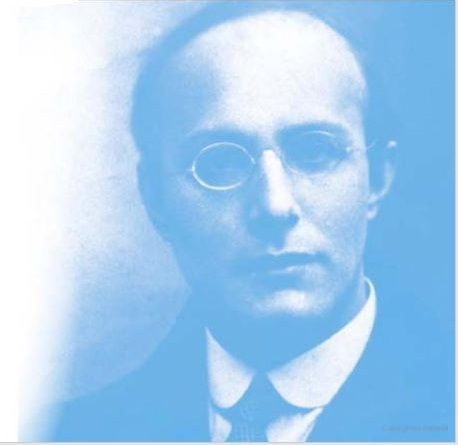
In his speech at the 1974 Nobel Prize banquet, Friedrich Hayek stated that had he been consulted on the establishment of a Nobel Prize in economics, he would “have decidedly advised against it“, primarily because “The Nobel Prize confers on an individual an authority which in economics no man ought to possess. This does not matter in the natural scienes. Here the influence exercised by an individual is chiefly an influence on his fellow experts; and they will soon cut him down to size if he exceeds his competence. But the influence of the economist that mainly matters is an influence over laymen: politicians, journalists, civil servants and the public generally. Nevertheless, Hayek accepted the award.
LikeLiked by 1 person
Thanks Stephen!
Yes, Reading Hayek’s criticism toward the Prize now — It is a kind of ironic… Taking into account Hayek’s economic-political agenda, I’m not sure that he would offer such criticism if he knew the trajectory the Prize took AFTER it was awarded to him.
LikeLike
I think that is a very insightful position of Hayek; I suspect a lot of people have more of an invested interest in economic theories than those of physics or chemistry. No one needs to understand a theory of gravity to justify the entertainment value or physical benefits of jumping rope. However, when I was a young man, the economist conservatives most quoted was Adam Smith, and now it has become Ayn Rand, so a Nobel Prize isn’t necessary to push economic theories that people have an economic incentive to believe.
LikeLike
It has been said the upper class never forgave Nobel for being a Social Democrat, and took revenge with a substantial amount of the prizes in ‘human affairs’ after he passed away. The so-called market-friendly turn has been a long process in the making and appears extreme in comparison to commensurable nations. It took a tremendous amount of calculated effort to make the average Swede switch focus from redistribution from capital to labour, to subsidies of the former by means from the latter. Public-funded private firms in the welfare sector showcases that the aim was rather extreme, as Sweden is close to unique with such transparent ‘tax-funded’ profits for a few.
The rise of the far right can only be properly understood if one recognises the lamentable democratic deficit in the transition. Not only did increasing inequality and exclusions of migrants cause expected social problems, but the undemocratic way it took form is undeniably one early source of frustration which amounted to induced helplessness and protest-voting against the political establishment. Before these reforms, you could spot thousands of average swedes in support of international solidarity on Mayday, just from a small industrial-city suburb. A couple of years after, the orchestra leading the same gathering looked huge in comparison to the few diehards scattered around a professional politician leading the transformation, which culminated in March 7 2024 decades later.
One of my favourite historical artifacts in this regard is the now forgotten research fund from the last century which made grants to counter the Marxist dominance (sic!) within Economics. I think there might be historical research to be done following the money of that grant alone.
LikeLiked by 1 person
Thanks Manuel for this insightful and very interesting comment! It interlaces with the contents of the above mentioned reads.
LikeLike
Thank you for the kind words, and literature suggestions. This subject provokes digging, but as there is so much to reveal one needs to have a good chat about where to do the digging first.
LikeLike
I’m inclined to blame the far right on two things. First is how social media has allowed misinformation to take on a life of its own, mutating beyond the intentions of corporate interests. Second is how conservative economic elites have failed to keep their promises to their voter base; for example, in America politicians who got their money from conservative economic elites kept promising to push back against feminism and gay rights to win votes, but didn’t; they just passed their tax cuts and deregulation for corporate donors and put their feet up. Now the voter base had taken over the GOP and are getting what they’ve wanted all along.
LikeLike
Take a look also at this today’s Forbes article “The Nobel Prize In Economics Is An Insiders’ Club Whose Time Has Passed”
https://www.forbes.com/sites/jamesbroughel/2024/10/12/the-nobel-prize-in-economics-is-an-insiders-club-whose-time-has-passed/
LikeLiked by 1 person
Dear Oleg ! It is indeed interesting to consider Hayek’s criticism of the Nobel Prize in Economics in light of the developments that followed his award in 1974. Hayek was critical of the ways in which economic theories could be politicized and how certain approaches could lead to harmful policy outcomes. He was particularly concerned with the use of economic science to justify interventions that might disrupt the natural order of the market.
Given the trajectory of the Nobel Prize in Economics since 1974, one might argue that many recipients have embraced methodologies or policy implications that Hayek himself would have criticized. For example, subsequent laureates have often focused on various forms of intervention or have promoted models that emphasize the role of government in managing economies, which contrast sharply with Hayek’s classical liberalism and belief in the spontaneity of order within free markets.
Had Hayek been aware of how the prize would highlight certain mainstream economic theories and actions—such as central bank interventions, behavioral economics, or even aspects of Keynesianism—he might have adjusted his criticism. While he supported the recognition of contributions to the field of economics, he might have viewed the continued evolution of the prize as a mixed blessing, considering the potential for misinterpretation or misapplication of economic principles that stand in opposition to his philosophical stance.
Ultimately, it raises fascinating questions about the nature of intellectual recognition, the evolution of economic thought, and the relationship between theory and practice in public policy. Best: stephen
LikeLike
It seems to me that the trend in economic research is simply moving away from pristine theories and charts to how economic theories compare to the messiness of psychology and culture. Humanity evolved as a social animal, and economic theories that assume we are just individuals in a marketplace don’t take into account that we are also members of families, religions, and nations that do influence economic decisions. It wouldn’t surprise me if Hayek had taken this into account, but I rarely see his followers do so.
LikeLiked by 1 person
Wow, I love that opening paragraph. LOL
LikeLiked by 1 person