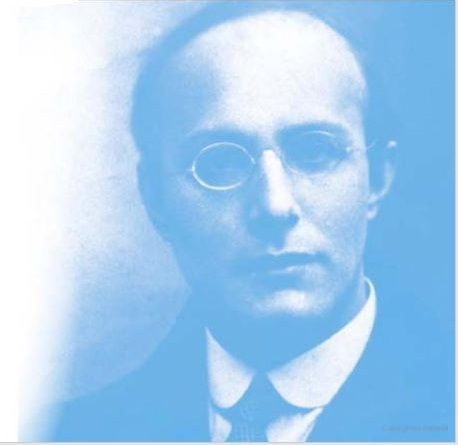
Bruno Latour — a passage and an observation that only he could make:
The French, it is well known, love revolutions, political, scientific or philosophical. There is nothing they like more than a radical upheaval of the past, an upheaval so complete that a new tabula rasa is levelled, on which a new history can be built. None of our Prime Ministers starts his mandate without promising to write on a new blank page or to furnish a complete change in values and even, for some, in life. Each researcher would think of him or herself as a failure, if he or she did not make such a complete change in the discipline that nothing will hereafter be the same. As to the philosophers they feed, from Descartes up to Foucault’s days, on radical cuts, on ‘coupure épistémologique’, on complete subversion of everything which has been thought in the past by everybody. No French thinker, indeed no student of philosophy, would seriously contemplate doing anything short of a complete revolution in theories. To hesitate, to respect the past, would be to compromise, to be a funk, or worse, to be eclectic like a vulgar Anglo Saxon!
Latour, Bruno. 1989. “The Enlightenment without the Critique: A Word on Michel Serres’ Philosophy”. Pp. 83-98 in Contemporary French Philosophy, edited by A. Phillips Griffiths. Cambridge University Press.
***
Feel free to share this post with your colleagues, students and friends.
Follow Economic Sociology & Political Economy community on
Facebook / Twitter / LinkedIn / Whatsapp / Instagram / Tumblr / Telegram / Threads
Discover more from Economic Sociology & Political Economy
Subscribe to get the latest posts sent to your email.

I wonder if that’s the cause why many French theorists have exploited theories and discoveries of the past to rebrand them as something new that they discovered.
LikeLiked by 1 person