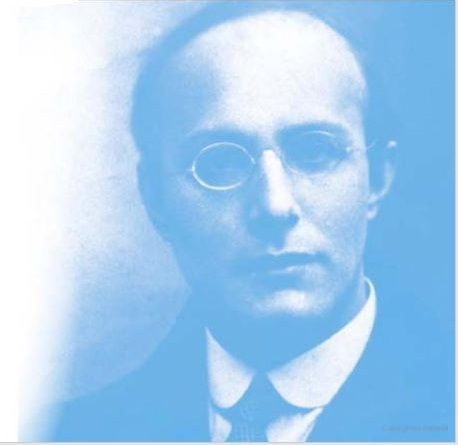

On 6 October 2015, a great theoretical physicist Stephen Hawking conducted a special Reddit “Ask Me Anything” session. Out of the thousands of submitted issues, Hawking selected those he wished to reply, mainly discussing aspects of artificial intelligence. In conclusion, Hawking picked a question about technological unemployment and ended with an insightful alarming observation on socio-economic and political trajectories:
Q: Have you thought about the possibility of technological unemployment, where we develop automated processes that ultimately cause large unemployment by performing jobs faster and/or cheaper than people can perform them? Some compare this thought to the thoughts of the Luddites, whose revolt was caused in part by perceived technological unemployment over 100 years ago. In particular, do you foresee a world where people work less because so much work is automated?
Stephen Hawking: “If machines produce everything we need, the outcome will depend on how things are distributed. Everyone can enjoy a life of luxurious leisure if the machine-produced wealth is shared, or most people can end up miserably poor if the machine-owners successfully lobby against wealth redistribution. So far, the trend seems to be toward the second option, with technology driving ever-increasing inequality.” (The original Reddit thread)
A year later Hawking wrote an alarming article for Guardian:
“We can’t go on ignoring inequality, because we have the means to destroy our world but not to escape it. […] The automation of factories has already decimated jobs in traditional manufacturing, and the rise of artificial intelligence is likely to extend this job destruction deep into the middle classes, with only the most caring, creative or supervisory roles remaining. […] [Automation] will accelerate the already widening economic inequality around the world. […] The internet and the platforms that it makes possible allow very small groups of individuals to make enormous profits while employing very few people. This is inevitable, it is progress, but it is also socially destructive. […] We are living in a world of widening, not diminishing, financial inequality, in which many people can see not just their standard of living, but their ability to earn a living at all, disappearing.”
Hawking, by the way, had socialist sympathies from his youth and for many years supported the Labour Party. He especially feared privatisation of healthcare in the UK. As he stated in 2009 “I wouldn’t be here today if it were not for the NHS… I have received a large amount of high-quality treatment without which I would not have survived.” In 2017 he warned: “The more profit is extracted from the system, the more private monopolies grow and the more expensive healthcare becomes. The NHS must be preserved from commercial interests and protected from those who want to privatise it”.
Apparently, one would say, every brief history of time is the history of class struggles.
Open Access PDF of this post is archived on SSRN.
For academic citation of this post, always use the following DOI:
http://doi.org/10.2139/ssrn.6684798
***
Join Economic Sociology & Political Economy community via
Facebook / Twitter / LinkedIn / Whatsapp / Instagram / Tumblr / Telegram
Discover more from Economic Sociology & Political Economy
Subscribe to get the latest posts sent to your email.

A simple and eloquent statement of the obvious. Hawking was a great mind and soul who will be greatly missed.
LikeLike
So, do we want utopia or dystopia? It’s really a political question. Even now, more famines are caused by political decisions (going to war, embargos, etc) than ecological issues. We have the resources to solve the world’s problems, but have spent the money on other things instead.
LikeLike
Stephen Hawking warns that science and education are in danger around the world.
The words of the scientist, who died in March at age 76, were broadcast in London during the presentation of his latest book, “Brief Answers To The Big Questions”.
https://everydayscience.blog/science-danger-stephen-hawking-message/
LikeLike
Reblogged this on Digital learning PD Dr Ann Lawless and commented:
the history of class struggles and new tech 0-Hawking spoke
LikeLike