
by Vijay Selvam*
Bitcoin has failed. Seventeen years since inception, Bitcoin remains a solution in search of a problem. With its eyewatering volatility, it has flopped as an inflation hedge. The much-touted scarcity of its 21-million-coin cap is rendered meaningless in a landscape teeming with thousands of other cryptocurrencies, each claiming to be scarce in its own right. Bitcoin’s most reliable use is as a tool for illicit activity, facilitating money laundering, terrorist financing, and ransomware attacks with alarming efficiency. Yet Bitcoin’s most damning indictment lies in its staggering energy consumption which is greater than that of entire nations like Argentina—an environmental cost too high to ignore.
Sound familiar? To anyone who has followed mainstream media coverage of Bitcoin over the past decade, these criticisms are practically a mantra: so pervasive, so oft repeated, that one might recite them by heart. But what if you learned that every single assertion in the paragraph above were not just misleading, but demonstrably false?
Has Bitcoin failed? Bitcoin is a censorship-resistant and permissionless money, operating peer-to-peer entirely outside the banking system, beyond the control of any government. Do you believe such an invention is a solution in search of a problem? Ask Alexei Navalny’s supporters, who used Bitcoin to bypass Putin’s financial crackdown when Russian authorities froze opposition bank accounts. Ask Roya Mahboob who used Bitcoin to help Afghan women escape the Taliban’s oppressive financial restrictions as their life savings were reduced to nothing overnight. Ask Nigerian activists, whose government shut down their bank accounts for protesting police brutality, forcing them to turn to Bitcoin to continue their protests. Or ask the millions of people in Turkey, Venezuela, Ukraine, or several other nations where hyperinflation, economic collapse, and war have left the banking system captured and in disarray, with Bitcoin their only hope. Across the world, from the hands of refugees to the voices of the silenced, Bitcoin has been nothing short of a lifeline where traditional banks have failed them. For billions of unbanked people around the world, Bitcoin offers the unprecedented ability to store, send, and receive money with nothing more than a smartphone and an internet connection. Rather than being a solution in search of a problem, it could be that the problem itself is misunderstood, let alone the solution.
Is Bitcoin just another cryptocurrency interchangeable with 20,000 others? Bitcoin’s core invention—digital scarcity—is a unique path-dependent one-time invention. Digital scarcity empowers Bitcoin to serve as “digital gold” with a fixed unalterable supply cap, directly challenging central banking monetary policy, arbitrary money printing, and inflation. Lumping Bitcoin together with Dogecoin, Pepe Coin, or Trump Coin is like equating a spacecraft with a rubber balloon—after all, both have curved surfaces and move through the air, do they not? Unlike the infinite number of cryptocurrencies that have followed it, Bitcoin emerged organically with true decentralization, benefiting from insurmountable network effects. The second-largest cryptocurrency is less than 16% the size of Bitcoin, the fifth merely 5%, the tenth 0.7%, and the twentieth around 0.3%—mostly rounding errors. Bitcoin is the Sun in the cryptocurrency solar system. Economic incentives, game theory, Metcalfe’s Law, the Lindy Effect, Schelling points, the 10x improvement rule among many other factors contribute to the emergence of true digital scarcity as a path-dependent, once-in-history invention. To grasp the meaning of this, one must delve into Bitcoin’s fundamentals rather than make assumptions based on catchphrases and social media hyperbole.
Has Bitcoin failed as a long-term inflation hedge? Bitcoin’s notorious short-term volatility—a topic that the mainstream media never tires of fixating on—obscures its undeniable long-term trajectory. Bitcoin’s price has risen from less than a cent to $100,000 in just 15 years. Has there ever been a more powerful inflation hedge over a comparable period? Inflation hedging is not about obsessing over day-to-day (or even week-to-week or month-to-month) price movements but rather about preserving your wealth over years and decades, ensuring financial security into retirement. You need a long-term perspective. If you observe Bitcoin’s multi-year average price performance (e.g. its four-year moving average price), you will notice little volatility, just an asset that has relentlessly appreciated since inception, without a single dip over its entire life.
Is Bitcoin primarily used by criminals? The data presents a different view. Over 99.6% of Bitcoin transactions are perfectly legitimate wherein it is used by millions to transact worldwide with self-sovereignty. The 0.34% of illicit transactions continue to fall further year-on-year. Despite popular misconceptions, Bitcoin’s public blockchain makes it a poor tool for criminals. Every transaction is permanently recorded and traceable, as demonstrated in multiple high-profile law enforcement cases. Heather Morgan and Ilya Lichtenstein were caught laundering $4.5 billion in stolen Bitcoin after authorities traced them on the blockchain. In 2017, Bulgarian authorities seized 213,519 bitcoins from cybercriminals. In 2021, the FBI recovered $2.3 million from the Colonial Pipeline ransomware attack by following the blockchain trail. In 2022, 94,000 bitcoins were recovered from hackers of Bitfinex. Bitcoin’s transparent and immutable public ledger alongside extensive blockchain surveillance and forensic tools continue to prove a natural deterrent to criminals.
Is Bitcoin really the environmental villain it is painted as? Again, the facts tell a different story. Bitcoin accounts for just 0.6% of global energy consumption and an even smaller 0.13% of global carbon emissions, thanks to its heavy reliance on renewables. Today, around 60% of Bitcoin mining is powered by sustainable energy, a higher share than any other industry, with projections reaching 80% by 2030. Bitcoin helps bootstrap renewable energy projects by consuming stranded and wasted energy. For example, in Mount Mulanje, Malawi, Bitcoin miners are transforming surplus renewable energy into a self-sustaining revenue stream, funding community electrification, all without aid or subsidies. This model shows that surplus energy in remote areas can fuel economic growth and energy independence across Africa. Bitcoin mining is also tackling methane emissions, converting flared methane into electricity, mitigating its greenhouse gas impact. Already, miners offset 3 Megatons of CO₂ annually, representing 7% of Bitcoin’s total emissions, with experts predicting a net carbon-negative footprint for Bitcoin by 2028. Would it surprise you to learn that Bitcoin is one of the world’s top ESG assets?
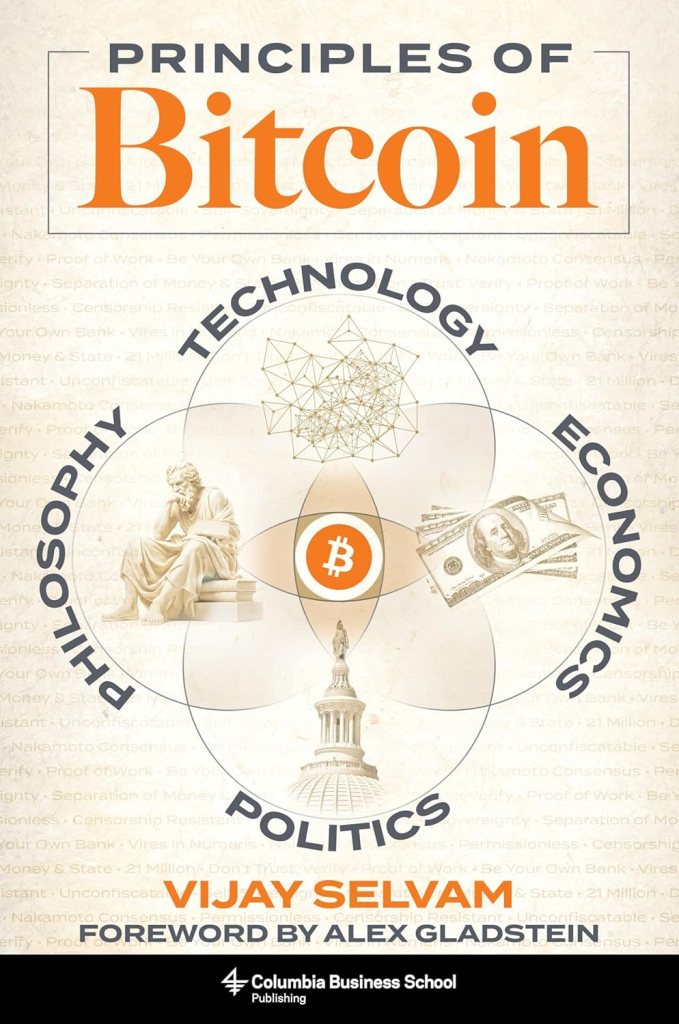
Seventeen years on, Bitcoin remains one of the most misunderstood inventions of our time. Its elusiveness arises partly from its intersection with multiple fields and disciplines—technology, economics, politics and philosophy to name a few. It warrants a multidisciplinary and holistic examination, not a siloed and cursory review. Some Bitcoin enthusiasts, frustrated by persistent misconceptions, have responded to critics with tropes and memes, some playful, others more combative: among them is the claim that “Bitcoin is an IQ test,” implying that critics simply lack the intelligence to grasp its true meaning and significance. This perspective is incorrect, of course. Understanding Bitcoin does not require exceptional intelligence. Rather, it requires curiosity, a willingness to learn, and the humility to question one’s own assumptions. It is a test of one’s ability to engage with an idea that challenges conventional wisdom. It is a test of how willing you are to see the world differently. Bitcoin is not an IQ test; it is an open-mindedness test.
——————–
* Vijay Selvam is the author of Principles of Bitcoin: Technology, Economics, Politics, and Philosophy (Columbia Business School Publishing, 2025). He is the International General Counsel at Gemini (the crypto exchange founded by the Winklevoss brothers), a corporate lawyer and financial services expert with experience across the US, UK, and Asia. Selvam is a graduate of Harvard Law School, Oxford University, and Cardiff University.
***
Since you find value in the content and resources shared by the ES/PE community, please consider making a contribution to help sustain our work. Your support is vital to maintaining our independence and carrying forward our mission. You can donate securely now via this PayPal link. Every contribution makes a meaningful difference and helps ensure the continuation of accessible scholarship and useful information. Thank you for being part of this community!
Discover more from Economic Sociology & Political Economy
Subscribe to get the latest posts sent to your email.

This take is what the young people nowadays call ‘delulu’, or even ‘giga-cringe’. But hey, it’s somebody working for a crypto exchange expert asking people to be ‘open-minded’. His open mind didn’t help him to question whether bitcoin being an ESG rated asset is worth anything, whether offsets make bitcoin and its destructive emissions ‘green’ (offsets are a scam), whether any of this justifies bitcoin using energy that lots of people actually need, I’m also not sure listing a few criminals who have been caught doing crypto crime is a convincing argument that crypto is, actually, good.
LikeLiked by 1 person
The articles below present essentially alternative and critical analyses of Bitcoin:
https://jacobin.com/2022/03/crypto-bitcoin-ukraine-russia-war-finance-funding
https://monthlyreview.org/2022/12/01/crypto-convulsions-digital-delusions-and-the-inexorable-logic-of-finance-capitalism/
LikeLiked by 1 person