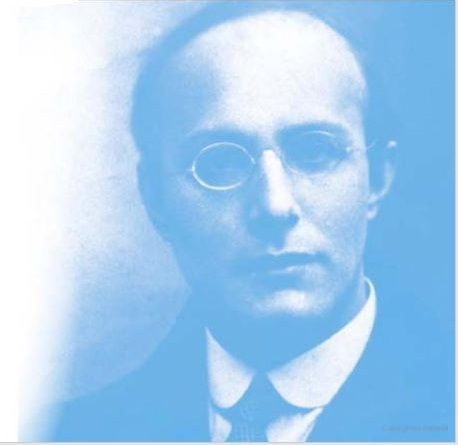
 Hyman Minsky (1919–1996) was a distinguished American scholar and prominent post-Keynesian economist. His theories and research were largely ignored for decades by the mainstream (Neoliberal) economics and his work was pushed out of public and academic discussions. But in the wake of the 2007-9 financial crisis Minsky’s invaluable scientific contribution has begun widely spreading, being studied and cited.
While mainstream economists traditionally explained economic crises and downturns as the result of external shocks, Minsky held that the capitalist system itself generates shocks through its own internal dynamics and financial capitalism is inherently unstable. A key mechanism that pushes an economy towards increasing financial fragility and the possibility of crisis is the rampant speculation and the accumulation of debt by the private sector (investors, banks, companies). Minsky claimed that during prolonged prosperity firms and financial institutions become more willing to increase leverage and rely on more fragile forms of financing; actors take on more risk and a speculative euphoria develops. Soon thereafter debts exceed what borrowers can pay off from their incoming revenues (especially during the period of monetary tightening) which in turn produces a financial crisis. This slow movement of the financial system from stability to fragility followed by sudden major collapse is, what later became known following the term coined by Paul McCulley, a “Minsky moment”.
“The first theorem of the financial instability hypothesis is that the economy has financing regimes under which it is stable, and financing regimes in which it is unstable. The second theorem of the financial instability hypothesis is that over periods of prolonged prosperity, the economy transits from financial relations that make for a stable system to financial relations that make for an unstable system.
In particular, over a protracted period of good times, capitalist economies tend to move from a financial structure dominated by hedge finance units to a structure in which there is large weight to units engaged in speculative and Ponzi finance. Furthermore, if an economy with a sizeable body of speculative financial units is in an inflationary state, and the authorities attempt to exorcise inflation by monetary constraint, then speculative units will become Ponzi units and the net worth of previously Ponzi units will quickly evaporate. Consequently, units with cash flow shortfalls will be forced to try to make position by selling out position. This is likely to lead to a collapse of asset values.”
 This extract above is from Minsky’s concise and insightful paper “The Financial Instability Hypothesis” (1992) in which he summarizes his core ideas. The following paragraph is from an enlightening “Capitalist financial processes and the instability of Capitalism” (1980):
“To understand the short-term dynamics of the business cycle and the longer-term evolution of economies it is necessary to understand the financing relations that rule, and how the profit-seeking activities of businessmen, bankers, and portfolio managers lead to the evolution of financial structures.”
Some argue that China’s Minsky Moment is probably happening now. It is too early to know. But not at China’s stock markets one needs to look these days, rather reread and delve into the academic literature (in economic sociology, political economy, heterodox economics) which time and again expose the endogenic destructive fundamentals of finance capitalism and neoliberalism.
Open Access PDF of this post is archived on Zenodo.
For academic citation of this post, always use the following DOI:
https://doi.org/10.5281/zenodo.18896930
***
Join Economic Sociology & Political Economy community via
Facebook / Twitter / LinkedIn / Whatsapp / Instagram / Tumblr / Telegram
Discover more from Economic Sociology & Political Economy
Subscribe to get the latest posts sent to your email.

[…] Source: China’s Minsky moment: stability leads to instability […]
LikeLike
[…] to the text that are not my own. The generic depiction of the Minsky moment I borrow from the economicsociology.org blog, and the graphs depicting the Austrian business cycle theory from Frank Shostak who himself […]
LikeLike
[…] The Minsky Cycle. Source: Economic Sociology and Political Economy […]
LikeLike
[…] The Minsky Cycle. Source: Economic Sociology and Political Economy […]
LikeLike